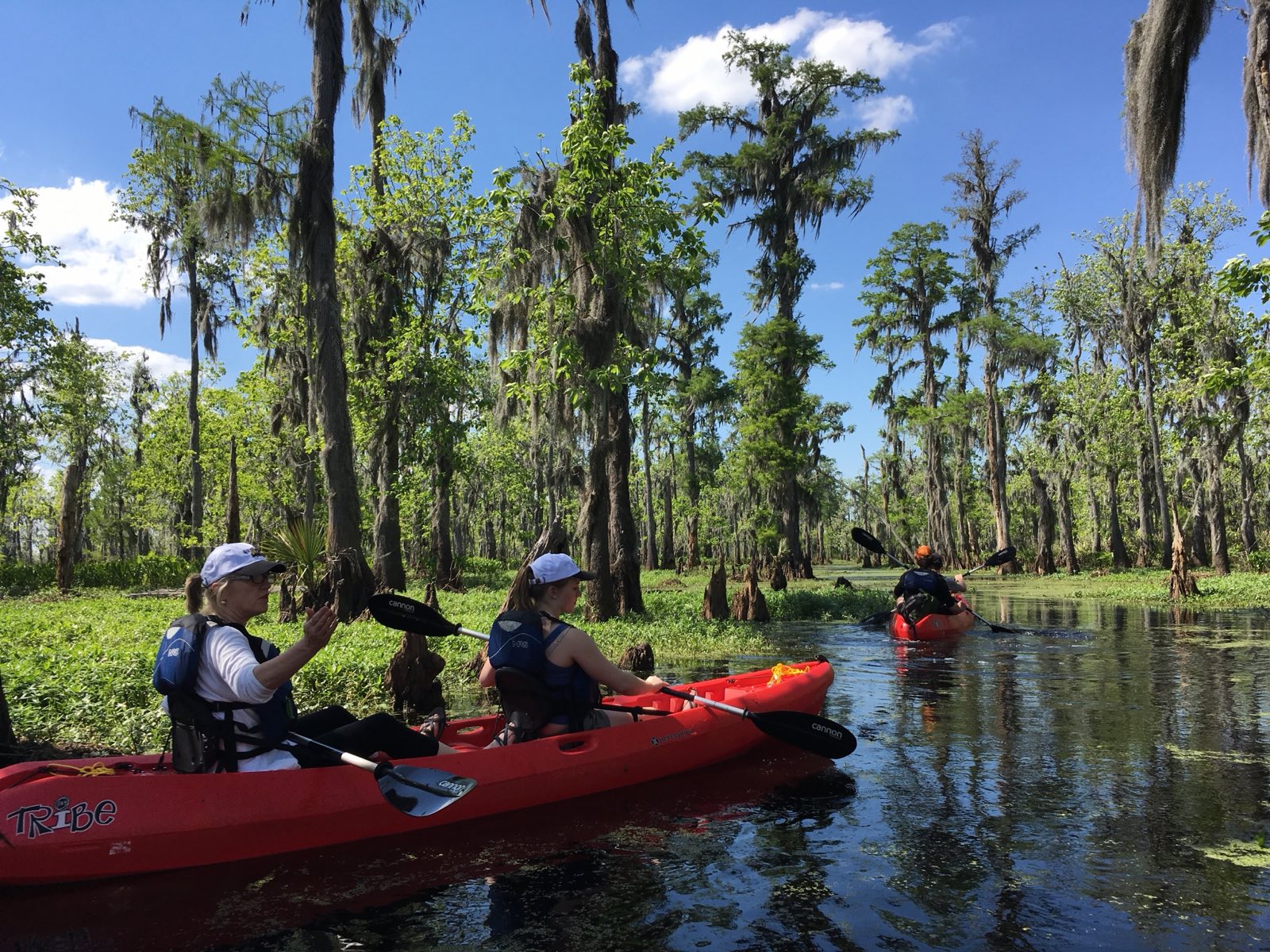

The two things that ruin swamp kayak tours are footwear and sun. Get those right and the rest is minor. Get them wrong and you spend a two-hour paddle either soaking in wet shoes or squinting into a featureless glare while your neck burns. Here is the practical list, by season, with no padding.
The basics that apply year-round
- Sun protection is the priority. The swamp has a canopy but it is not solid. You will be on open water for stretches, and the reflection off black water amplifies UV. UPF shirt, sunscreen on your hands and face, a hat with a brim. Non-negotiable in summer, still important in winter.
- Footwear that can get wet. You will almost certainly step in mud or shallow water at launch. Sandals with a heel strap, water shoes, or old sneakers all work fine. What doesn’t work: flip flops that come off in the mud, bare feet, anything you care about.
- Dark or earth-tone colors. Not required, but darker clothes on the water make wildlife approach closer. A bright orange shirt announces you. A dark green or brown one blends in. If you want to get close to birds and gators, dress like the swamp.
- Nothing loose that can fall in. Sunglasses on a leash if you have one. Light layers that won’t blow off. A small dry bag or a ziplock for your phone.
Summer (June through September)
Hot, humid, and mosquito season. The priority shifts to keeping the bugs off and the heat manageable. Long sleeves in a lightweight, breathable UPF fabric actually runs cooler than bare skin in direct sun, because they block the heat load while wicking sweat. Sounds counterintuitive; guides who paddle all summer wear long sleeves.
Bug spray: DEET works, picaridin works and smells better. Apply before you get in the car. Mosquitoes in the Manchac and Honey Island are real but not catastrophic with protection; without it, summer is a different experience entirely. Book the earliest tour you can find, heat and bugs both peak in the afternoon.
Spring and fall (March through May, October through November)
The best seasons. Mild temperatures mean you can dress more lightly and the bugs are less relentless. A light layer for morning departures in fall, nothing in spring afternoons. Sun protection still applies. This is when the wildlife is most active and the light is best for photos.
Winter (December through February)
Underrated. Cooler temperatures keep the mosquitoes down, the fog on winter mornings is genuinely beautiful, and the crowds are thin. Dress for the ambient temperature plus wind chill off the water, which runs colder than you expect. A fleece mid-layer and a windproof shell is the right call in December and January. The gators are less active but still present.
What to leave in the car
Valuables, heavy bags, anything you’d be upset to lose to the water. Most tours have a place to lock your car at the launch site. Bring only what fits in your pockets or a small dry bag.
The operators who run trips well will give you a gear list when you book. Start with our comparison of New Orleans swamp tours to find one that fits your group and season.
Common questions
What should I wear on a swamp kayak tour?
Prioritize sun protection (UPF shirt, hat, sunscreen), shoes that can get wet (water shoes or old sneakers with a back strap), and bug repellent in summer. Dark or earth-tone colors help you get closer to wildlife. Avoid loose items that could fall in the water.
Do you get wet on a swamp kayak tour?
Usually just your feet and lower legs at the launch, from stepping in mud or shallow water. You are unlikely to capsize on a guided flatwater swamp tour, but paddling generates some splash. Do not bring anything you need to keep dry without a waterproof bag.
Are there mosquitoes on swamp tours?
Yes, particularly in summer. Apply DEET or picaridin before you leave. Long sleeves in lightweight fabric are worth wearing in June through September. Spring and fall tours are significantly less buggy.
What shoes should I wear kayaking in the swamp?
Water shoes, sandals with a back strap, or old sneakers. The main requirement is that they stay on your feet in wet mud and you don’t mind them getting dirty. Avoid flip flops and bare feet.
Find a tour that fits your season.