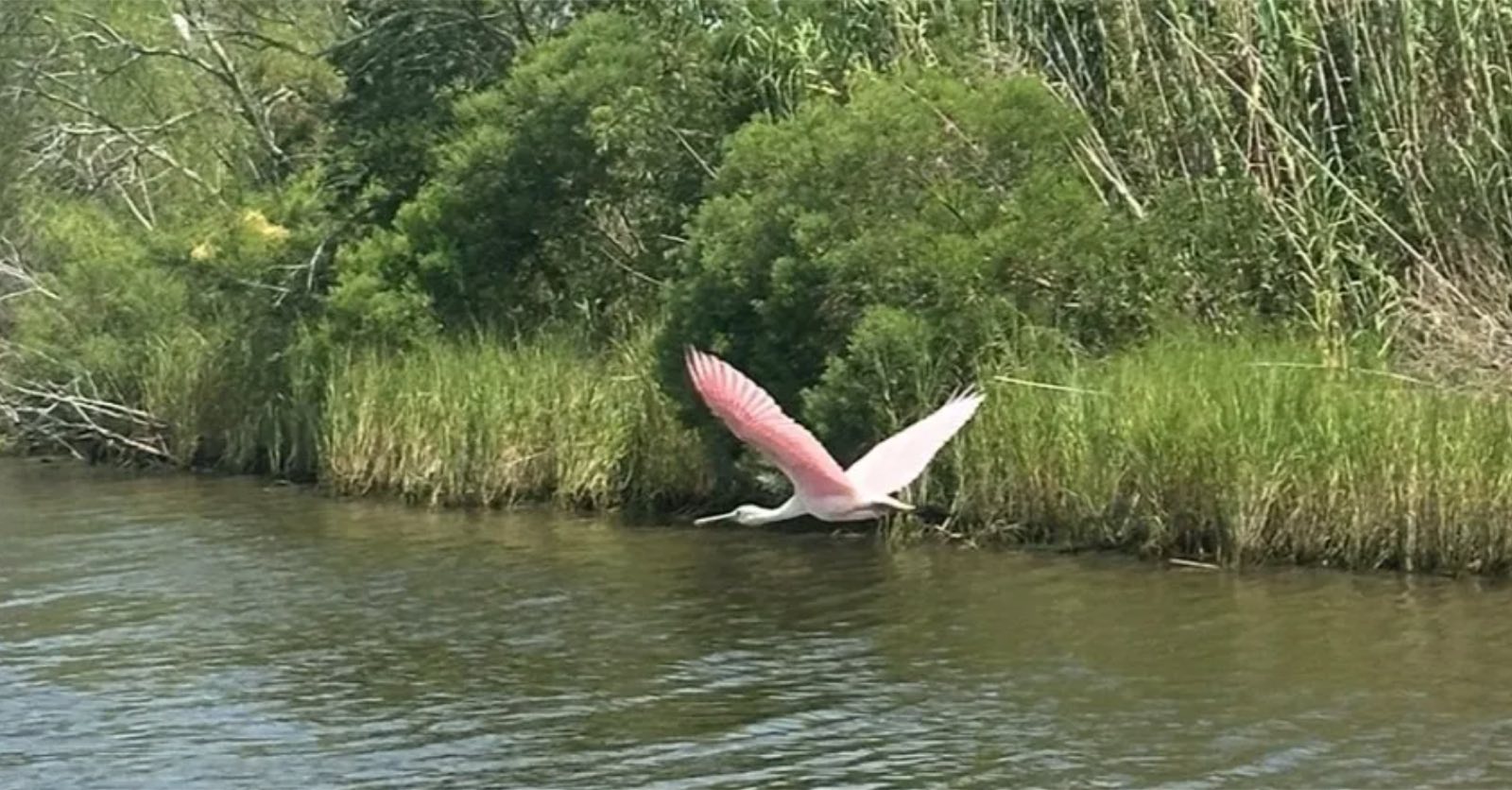

Alligators are what most people come for, and they deliver. But the alligator is one item on a list that includes roseate spoonbills, river otters, barred owls calling in the middle of the day, wild boar moving through the palmettos, and the occasional bald eagle riding a thermal above the cypress. Here is what you will actually see, and what you need to do to see more of it.
The reliable sightings (March through October)
- American alligators. Both Manchac and Honey Island have healthy populations. You will see them basking on logs and banks, sometimes swimming slowly through channels. In spring you may see territorial displays between large males. Guides know the reliable spots.
- Great blue herons. Year-round residents, present on nearly every paddle. They stand completely still in the shallows and then explode into flight when startled, which never stops being dramatic.
- Great and snowy egrets. White wading birds working the shallows. Snowy egrets are the smaller ones with yellow feet. Common on both swamps.
- Turtles. Every log in the swamp has a turtle on it. Red-eared sliders are the most common. They slide into the water as you approach and you can watch them drop in succession as the kayak passes.
- Nutria. The large South American rodent that has colonized Louisiana’s wetlands. Orange teeth, swims in the daytime, surprisingly unbothered by kayaks.
The seasonal standouts
Roseate spoonbills. Pink wading birds that look like flamingos. They are not flamingos. They feed by sweeping their spatula-shaped bills through the water. Spring and summer are peak times; they nest in rookeries that you can sometimes paddle under.
Wood storks and white ibis. Colonial nesters, best seen in spring and early summer. White ibis are common; wood storks are the big ones with the bald heads and the wingspan.
River otters. Less predictable than birds or gators, but present in both swamps. They are curious and will sometimes approach a still kayak. Morning paddles are the best bet.
Wild boar. Mostly a Honey Island sighting. You hear them in the underbrush before you see them. Occasionally groups cross shallow channels.
Bald eagles. Year-round residents in small numbers. More reliable in winter when the canopy is bare and they’re easier to spot.
How to see more
Move slowly. Stop paddling and let the boat drift. Talk quietly. The difference between a paddle where you see twelve species and one where you see four is almost entirely determined by how still and quiet the boat is. Guides who are naturalists rather than just drivers know this and run their trips accordingly.
A few operators in the operator comparison specifically emphasize naturalist guiding and small group sizes, which are the two variables that move the wildlife needle most.
Common questions
Do you see alligators on every swamp tour in New Orleans?
Almost certainly, from March through October when water temperatures are above 70 degrees. Alligator sightings are essentially guaranteed on morning paddles during this window. Winter tours see fewer alligators but the animals are still present.
Are there snakes in the Louisiana swamps?
Yes, including water moccasins (cottonmouths), which are venomous. They are present but encounters are uncommon on guided tours. Guides are aware of the common snake habitat and route trips to avoid likely encounters.
What birds can you see kayaking in New Orleans?
Common sightings include great blue herons, great egrets, snowy egrets, tricolored herons, roseate spoonbills, white ibis, anhingas, barred owls, ospreys, and bald eagles. Spring migration adds dozens of warbler and shorebird species.
Can you see river otters in the Louisiana swamps?
Yes, though they are less predictable than alligators or wading birds. Otters are present in both the Manchac and Honey Island swamps. They are curious animals and will sometimes approach a stationary kayak. Morning paddles give the best odds.
Go find the spoonbills.