
Nutria look like a beaver and a muskrat had a large, unhappy child, then gave it orange teeth. They are native to South America. They are in Louisiana because someone in the 1930s thought they would make good fur-farm animals, and the plan did not go as hoped. The fur market collapsed, the farmers released their stock, and now Louisiana has millions of nutria eating three to four pounds of marsh vegetation per day, roots and all. The coast is still paying for it.
The fur trade mistake
The coypu, known in North America as the nutria, was brought to Louisiana fur farms starting around 1938. In South America, its fur is genuinely valuable. The idea made commercial sense at the time. Then two things happened: some animals escaped from damaged cages, and the market for nutria fur in the United States never developed the way the promoters hoped. By the 1940s and 50s, farmers who couldn’t make money on the pelts were releasing the animals into the marsh rather than keep feeding them. From there, a Louisiana swamp being what it is, the population exploded.
What they actually do to the wetlands
The damage is called eat-outs. Nutria don’t graze the top of marsh grass the way a deer would. They dig down and eat the roots and rhizomes, which kills the plant entirely rather than letting it regrow. An area that a nutria colony has worked through goes from dense marsh to open water, sometimes within a single growing season. The bare mud left behind erodes quickly, and in a landscape that is already sinking and starved of sediment, the open water rarely closes back in.
They also burrow into levees and earthen structures, weakening them from the inside. In coastal Louisiana, where levees are often the only thing between a community and the Gulf, that is not a minor nuisance.
Control efforts
Louisiana has been fighting nutria seriously since 2002, when the state started paying trappers a bounty per tail to control the population. The program worked remarkably well: documented damage to coastal wetlands dropped more than 90 percent from its worst levels. The problem is that it only works as long as the bounties keep coming and the trappers keep trapping. The underlying nutria population has not been eliminated, just managed.
There have been ambitious side projects to make nutria commercially useful. Chefs in New Orleans have put nutria on menus. A designer made a coat from Louisiana nutria fur and photographed it on billboards as an environmental statement. Some of it has worked, more of it has stayed novelty. The most reliable control is still the bounty.
What you see on the water
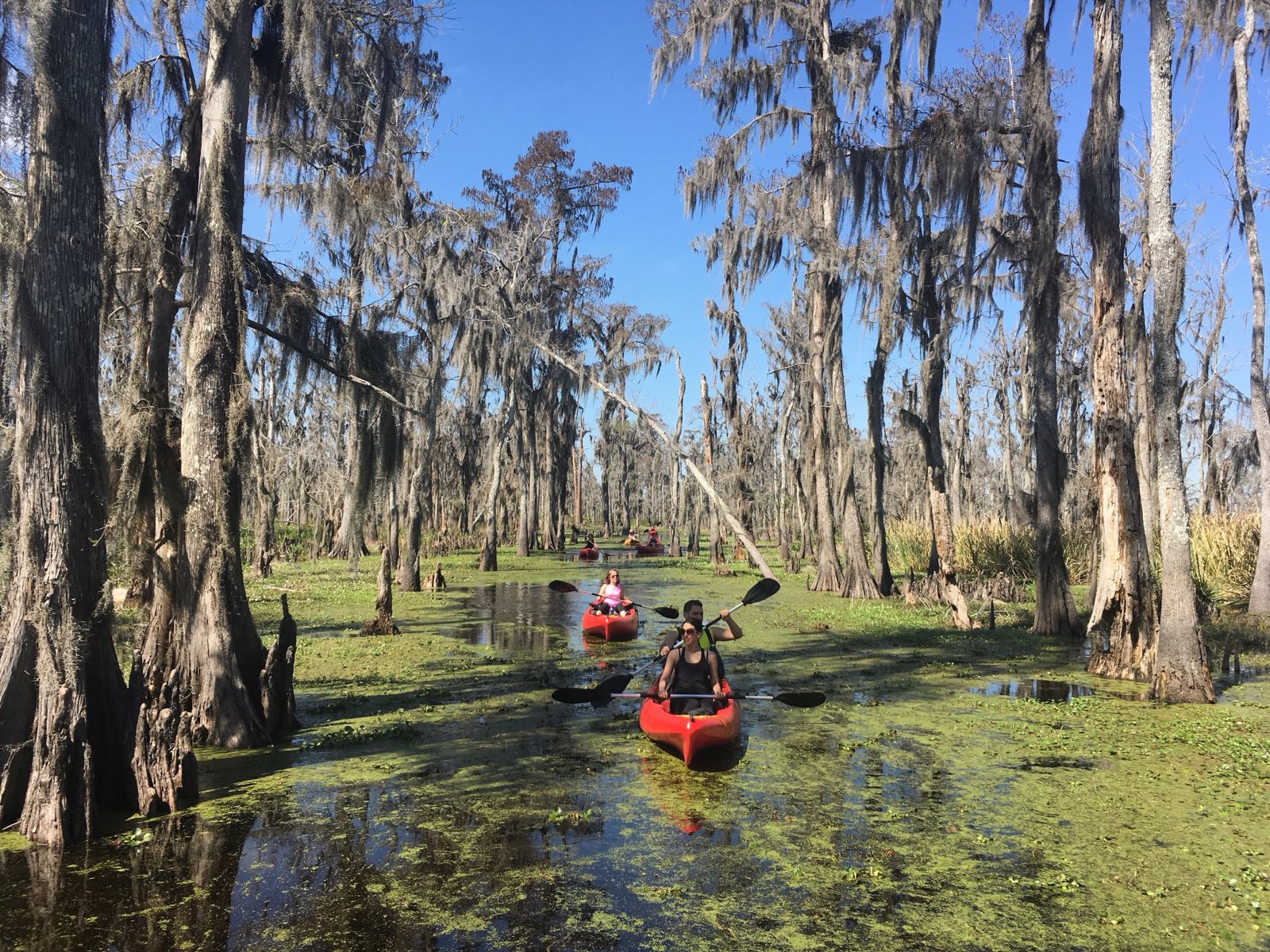
If you paddle in the Manchac Swamp or the marshes south of New Orleans, you will almost certainly see nutria. They are not shy. They swim in broad daylight, they have distinctive orange incisors from high iron content in their enamel, and they move in family groups. They are genuinely strange to look at. Guides will point them out and tell the story, which is the abbreviated version of everything above.
The eat-out damage is visible too, open water where marsh used to be, dead cypress standing in brackish zones. It connects to the bigger wetland loss story we covered in why Louisiana’s swamps are disappearing. The nutria are one part of a system that is failing in several ways at once.
Common questions
What is a nutria?
A nutria, also called a coypu, is a large semi-aquatic rodent native to South America. It looks similar to a large muskrat or a small beaver, with distinctive orange front teeth from high iron content in its enamel. Adults typically weigh 12 to 20 pounds.
Why are nutria in Louisiana?
Nutria were brought to Louisiana in the 1930s for fur farming. When the fur market did not develop as expected, farmers released animals into the wild. The Louisiana marsh provided ideal habitat and nutria populations grew rapidly.
How do nutria damage Louisiana’s wetlands?
Nutria eat marsh plants down to the roots, killing the plant rather than allowing it to regrow. This creates open water in areas that were once dense marsh. The bare mud erodes quickly, contributing to Louisiana’s coastal land loss. They also burrow into levees, weakening them.
Can you see nutria on a Louisiana kayak tour?
Yes, commonly. Nutria are active during the day and not particularly shy around kayaks. They are one of the regular wildlife sightings on guided swamp tours near New Orleans, along with alligators, wading birds, and turtles.
See nutria, gators, and spoonbills in the same morning.