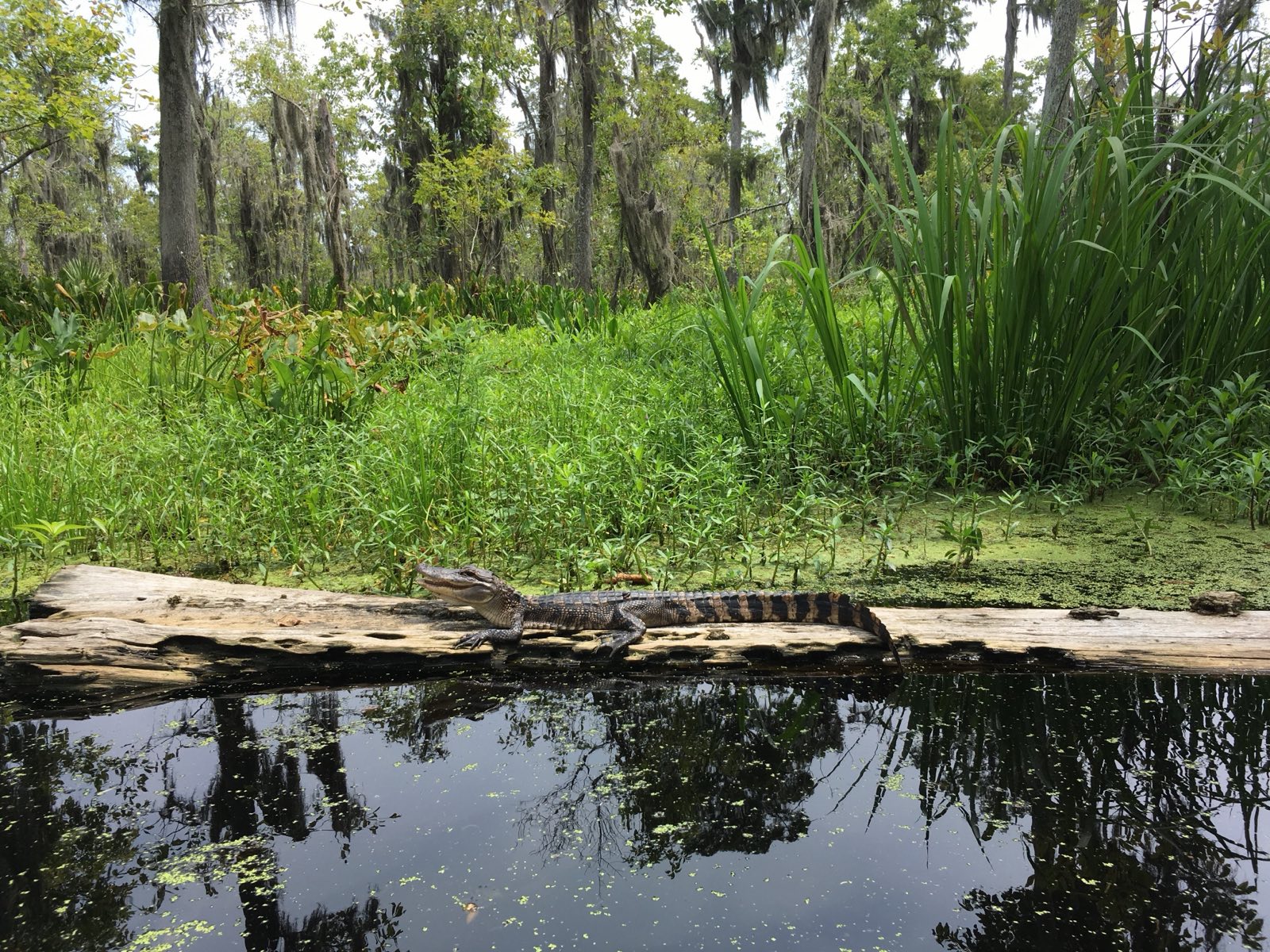

The two questions I hear most from people booking a swamp trip are: Manchac or Honey Island? And they are genuinely different paddles. Not better or worse, different in ways that actually matter depending on who you are and what you want. Here is the honest comparison.
Manchac Swamp: the case for it
Manchac, specifically the bayou network around the land bridge near LaPlace, is flatwater. Dead flat. No current, no wind exposure, no surprises from river levels. The channels are protected by cypress on both sides, which keeps the boat steady and the wildlife close. It is the right answer for first-timers, families with kids, anyone managing a mobility issue, and people who want to focus on the experience rather than the mechanics of paddling.
The history density is also higher. Manchac is where the towns of Frenier, Ruddock, and Napton stood before the 1915 hurricane erased them. The old cemetery is still out there. Julia Brown’s story is in the air on every trip. For people who want a swamp tour with a real narrative, this is the one.
Honey Island Swamp: the case for it
Honey Island sits on the Pearl River system east of Slidell, about 45 minutes from New Orleans. The Pearl moves, which means the water in Honey Island moves with it, and the channels braid in ways that a Manchac guide never has to deal with. It is a river swamp: flooded forest, higher water in spring that opens up entirely new paddling, dramatic tidal exposure in late summer that concentrates wildlife in the sloughs.
The overall feeling is wilder and more remote. You will pass abandoned houseboats, see bigger swaths of undisturbed forest, and hear fewer cars. It is one of the least-altered river swamps in the United States, which is saying something for a place 45 minutes from a major city. And yes, the Honey Island Swamp Monster lives here, or doesn’t, depending on your priors.
The practical differences
- Drive time: Manchac is about 35 minutes from downtown New Orleans; Honey Island is about 45.
- Difficulty: Manchac is genuinely beginner-proof. Honey Island can have current in channels, especially in spring, and is better suited to people who have paddled before or are comfortable with a guide managing the route.
- Wildlife: Both have alligators, wading birds, and turtles. Honey Island tends to have larger gators and more wild boar activity on the banks.
- Best season: Manchac is good year-round. Honey Island is particularly good in spring when high water opens the flooded forest, and in fall when wildlife concentrates.
- Transportation: Several operators run pickups from downtown New Orleans for Manchac trips. Honey Island transport varies by operator.
If you can only pick one
First-timer, kids in the group, or you just want the sure thing: Manchac. More experienced paddler, you’ve done Manchac before, or you want the wilder and less scripted experience: Honey Island. There is no wrong answer.
Full guides to each: Manchac Swamp kayaking and Honey Island Swamp kayaking. The operator comparison covers who runs each one and what their trips look like.
Common questions
Which is better, Manchac Swamp or Honey Island Swamp?
Neither is objectively better. Manchac is flat, protected, and beginner-friendly, with more history attached. Honey Island is wilder, has moving water, and feels more remote. First-timers and families tend to prefer Manchac; more experienced paddlers often prefer Honey Island.
How far is Manchac Swamp from New Orleans?
About 35 minutes northwest of downtown New Orleans near LaPlace, Louisiana.
How far is Honey Island Swamp from New Orleans?
About 45 minutes east of New Orleans near Slidell, Louisiana, on the Pearl River.
Are there alligators in both Manchac and Honey Island?
Yes. Both swamps have healthy alligator populations that are reliably active from March through October. Honey Island gators tend to be larger on average, and the wild boar population is more visible there.
See both swamps compared side by side.