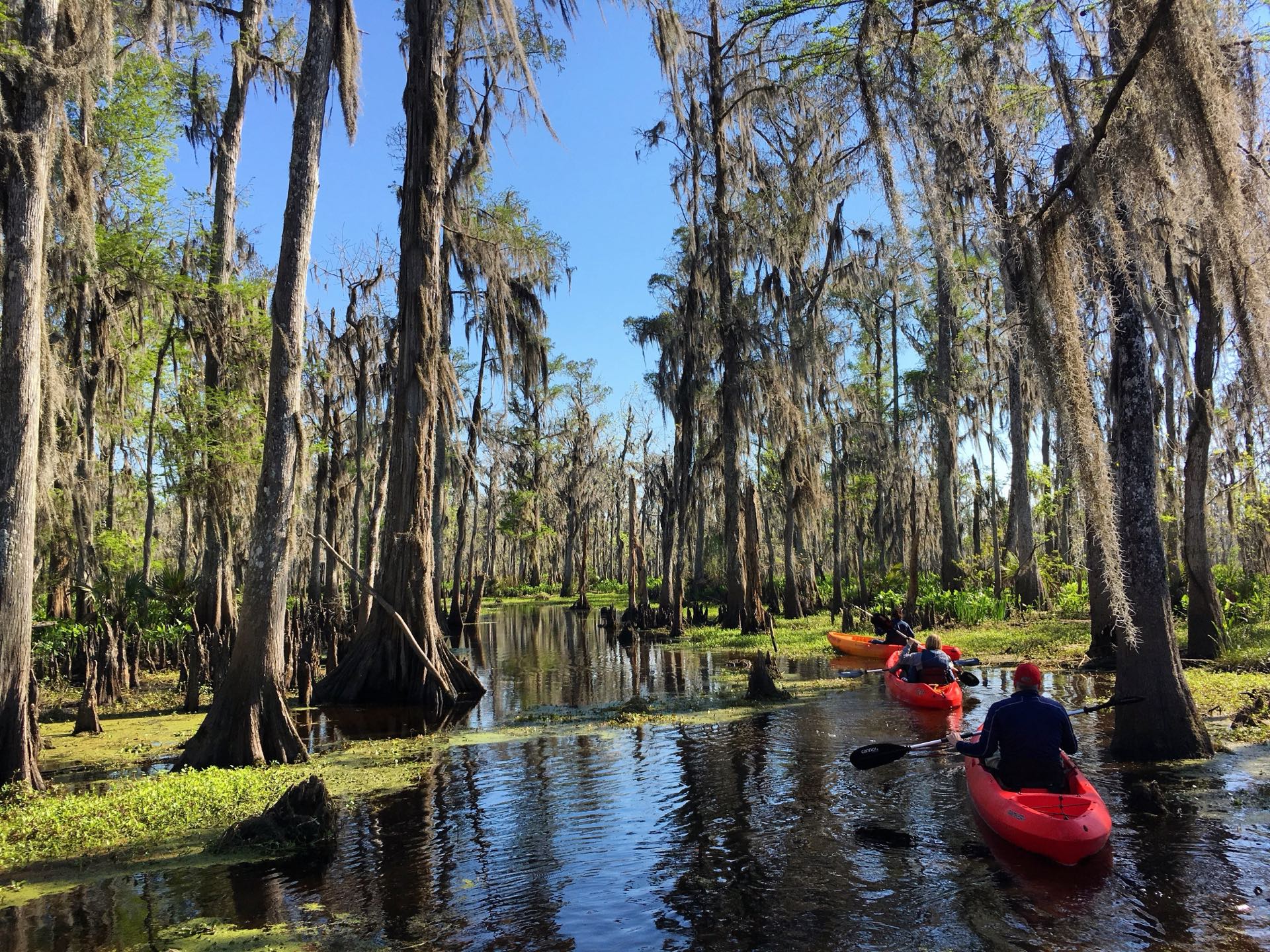

Jean Lafitte was a privateer, smuggler, and occasional folk hero who ran operations through the Louisiana bayous in the early 1800s. His base was on Grand Terre island in Barataria Bay, south of New Orleans, and the bayou network was his highway: shallow-draft pirogues moved plundered goods through channels too small and too twisting for customs officials to follow. Some of those channels are still there, and a few of them, you can paddle.
Who Lafitte actually was
The legend paints Lafitte as a dashing rogue, and the reality is not far off, though messier. He was probably born in France, probably around 1780, probably in the Basque country, though his exact origins are disputed and he liked it that way. By 1810 he was running the most productive privateering and smuggling network in the Gulf of Mexico out of a barrier island called Grand Terre, near Grand Isle, Louisiana.
By 1812, he commanded a small city at Barataria: warehouses, docks, hundreds of men, and a steady flow of stolen goods, enslaved people, and contraband that fed New Orleans markets at prices no legal importer could match. He was enormously popular with New Orleans buyers, who loved cheap goods and did not ask questions. The government found this considerably less charming.
The swamps as infrastructure
What made Lafitte hard to stop was the bayou network. Goods came in by sea to Grand Terre, then moved north through Barataria Bay and into the labyrinth of bayous and lakes between the Gulf and New Orleans. Pirogues and shallow flat-bottomed barges carried everything: fabric, wine, hardware, enslaved people. The channels were too shallow for naval vessels and too complicated for anyone without local knowledge to navigate.
When the US Navy did raid Grand Terre in 1814, Lafitte and his men scattered into the swamps. Officials who chased them there usually ended up captured, wounded, or simply lost. The swamp was not a hideout so much as a defensive system. Lafitte understood its geography better than his pursuers, and that asymmetry kept him free for years.
The Battle of New Orleans and the deal
The strangest chapter: in 1815, Lafitte helped Andrew Jackson defend New Orleans against the British. He brought men, weapons, and his intimate knowledge of the bayou approaches to the city. Jackson won, Lafitte got a presidential pardon, and for a short time he was a legitimate hero. He did not stay one. By 1817 he was back to smuggling, this time from Galveston Island, and he continued until the US Navy ran him off for good around 1820. What happened to him after that is genuinely unknown.
The buried treasure question
Yes, people still look. The treasure legend is attached to almost every Louisiana bayou with any connection to Lafitte, from the bayous of St. John Parish to the shores of Lake Charles. No authenticated cache has ever been found. The more plausible read is that Lafitte moved goods quickly and reinvested constantly; a pirate running a live operation doesn’t bury cash, he spends it. But the story persists, and certain stretches of bayou are more fun to paddle knowing it.
The waterways closest to his Barataria operations are south of the city, but the spirit of paddling through channels that European powers couldn’t navigate is alive in any of the swamps near New Orleans. Manchac and Honey Island both give you that sense of what the bayou network actually feels like from inside it.
Common questions
Did Jean Lafitte use the Louisiana swamps as a hideout?
Yes. Lafitte’s main base was Grand Terre island in Barataria Bay, south of New Orleans, and he used the bayou network extensively to move smuggled goods and to evade government forces. When the Navy raided Grand Terre, Lafitte and his men escaped into the swamps, which were impossible for outsiders to navigate quickly.
Where was Jean Lafitte’s headquarters?
Lafitte’s main headquarters was on Grand Terre, a barrier island in Barataria Bay near Grand Isle, Louisiana. By around 1812 it was a functioning port with warehouses, docks, and hundreds of men.
Did Jean Lafitte bury treasure in Louisiana?
There is no verified evidence of buried treasure. The story is attached to many Louisiana bayous and lakes, but historians consider it unlikely, since Lafitte ran an active business operation and had little reason to bury assets rather than use them.
What happened to Jean Lafitte?
After being expelled from Galveston Island by the US Navy around 1820, Lafitte’s fate is unknown. Various accounts place him in Texas, Central America, and South Carolina, but none have been conclusively confirmed.
Paddle the bayous that kept a pirate free.