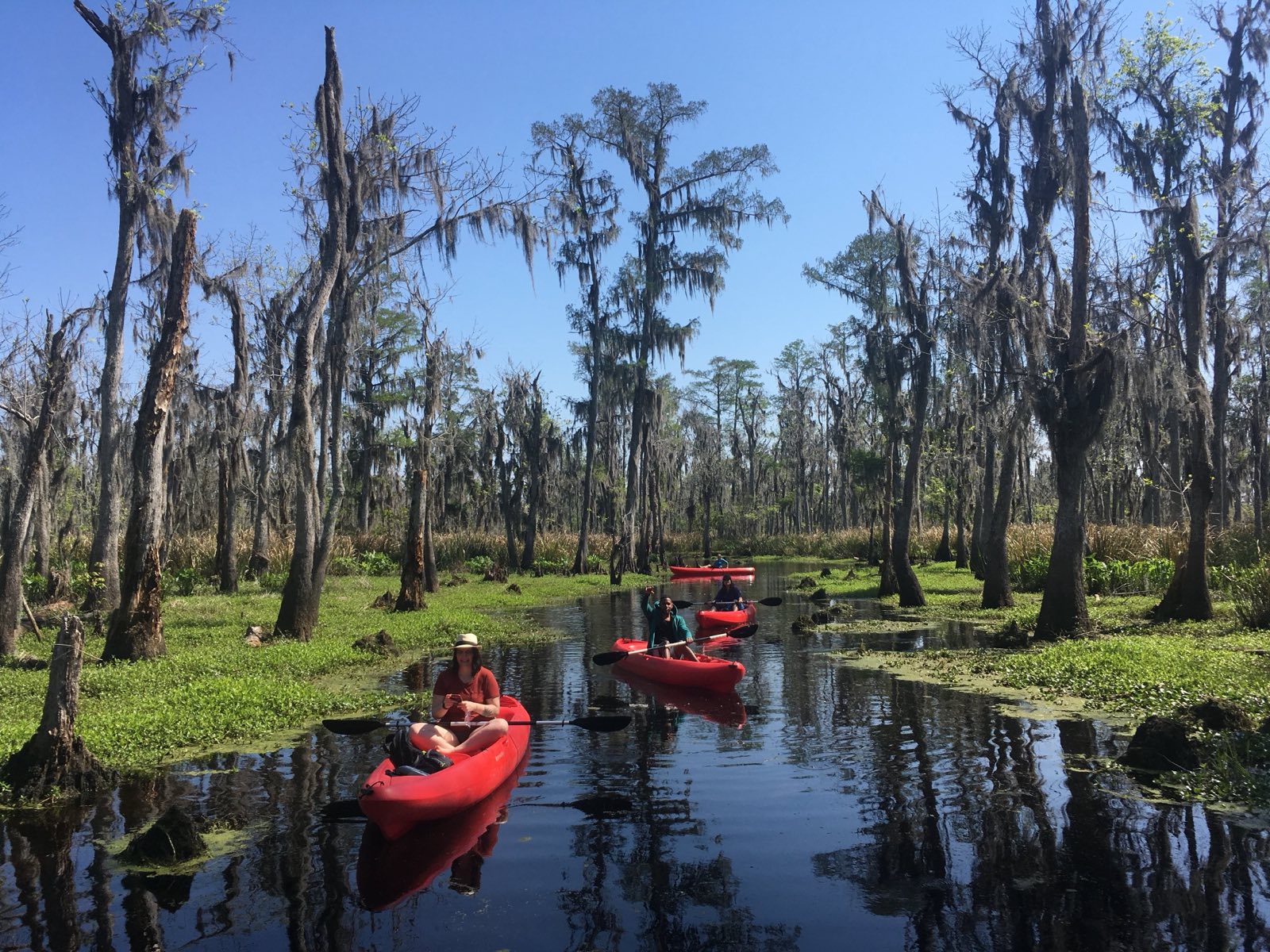

Three towns once stood in the Manchac Swamp between New Orleans and Baton Rouge: Frenier, Ruddock, and Napton. They were real places with rail stops, lumber mills, and cabbage farms. A single hurricane in 1915 destroyed all three in one night and none was ever rebuilt. The swamp has swallowed almost everything since, but you can still paddle past the sites, and the Frenier cemetery is still standing.
The towns the railroad built
It is hard to picture now, but in the late 1800s the Manchac land bridge had a working economy. The railroad between New Orleans and points north ran right through the swamp, and little towns grew up around the stops. Frenier, Ruddock, and Napton lived on timber, those giant cypress were worth a fortune, and on truck farming, especially cabbage, shipped north by rail. People were born there, married there, and buried there. For a few decades the swamp had street addresses.
The night it all ended
On September 29, 1915, the Great New Orleans Hurricane came ashore as a Category 4 and put the land bridge directly in its path. There was nowhere to go. The storm surge ran about 13 feet over flat swamp, winds hit roughly 125 miles per hour, and the buildings people sheltered in, including the Ruddock railroad depot, came apart. Hundreds of people across the region died, dozens in these three towns alone.
When it was over, Frenier, Ruddock, and Napton were simply gone. The economics never came back, the cypress had mostly been logged out anyway, and the swamp moved in to reclaim the cleared ground. Within a generation there was almost nothing left to show that towns had ever been there. (This is the same swamp tied to the Julia Brown legend, if you came here from that story.)
What’s left now
More than you’d think, and less than you’d hope. The clearest survivor is the Frenier cemetery, which still holds its headstones out in the swamp, slowly losing ground to water and root. Here and there you can spot old pilings and the straight, unnatural lines of former roadbeds and rail grade that the swamp hasn’t fully erased. Mostly what you find is absence: open water and cypress where a town used to be. That absence is the whole point.

How to actually paddle out and see it
The ghost-town sites sit in the bayou network around the Manchac land bridge, roughly 35 minutes from New Orleans. I’ll be honest about the catch: this is not a place to go wandering on your own unless you have real swamp navigation skills. The channels braid, they all look alike, and cell service is patchy at best. People get turned around out here in good weather.
Go with a guide who knows the water. A good one will get you to the cemetery and the old sites, keep you off the dead-end channels, and fill in the history as you paddle. Start with our Manchac Swamp kayaking guide for what the paddle is like, or compare the local tour operators to find one that runs this stretch.
Why these places matter
The swamp eating Frenier is not just a ghost story, it is a preview. Louisiana is still losing wetland at a staggering rate, and the same forces that let the swamp reclaim three towns are erasing the coast right now. If the lost towns make you want to understand what is happening to this landscape, read why Louisiana’s swamps are vanishing.
Common questions
What towns were destroyed in the Manchac Swamp?
Three towns on the Manchac land bridge, Frenier, Ruddock, and Napton, were destroyed by the Great New Orleans Hurricane on September 29, 1915. All three were railroad and farming communities, and none was ever rebuilt.
Can you still visit the Frenier cemetery?
Yes. The Frenier cemetery still stands in the Manchac Swamp with its headstones intact, though the swamp is slowly reclaiming it. It is usually reached by kayak as part of a guided tour, since the surrounding bayou network is easy to get lost in.
What happened to Ruddock, Louisiana?
Ruddock was a railroad town in the Manchac Swamp that was wiped out by the 1915 hurricane. Many residents sheltered in the railroad depot, which collapsed and killed about two dozen people. The town was never rebuilt and the swamp has reclaimed the site.
Is it safe to kayak in the Manchac Swamp?
Yes, with a guide. The water is flat and protected, which makes it beginner friendly, but the bayou network is a maze with poor cell coverage, so self-guided trips are only for experienced paddlers with offline navigation. Most visitors go on guided kayak tours.
Paddle out to the lost towns with someone who knows the water.