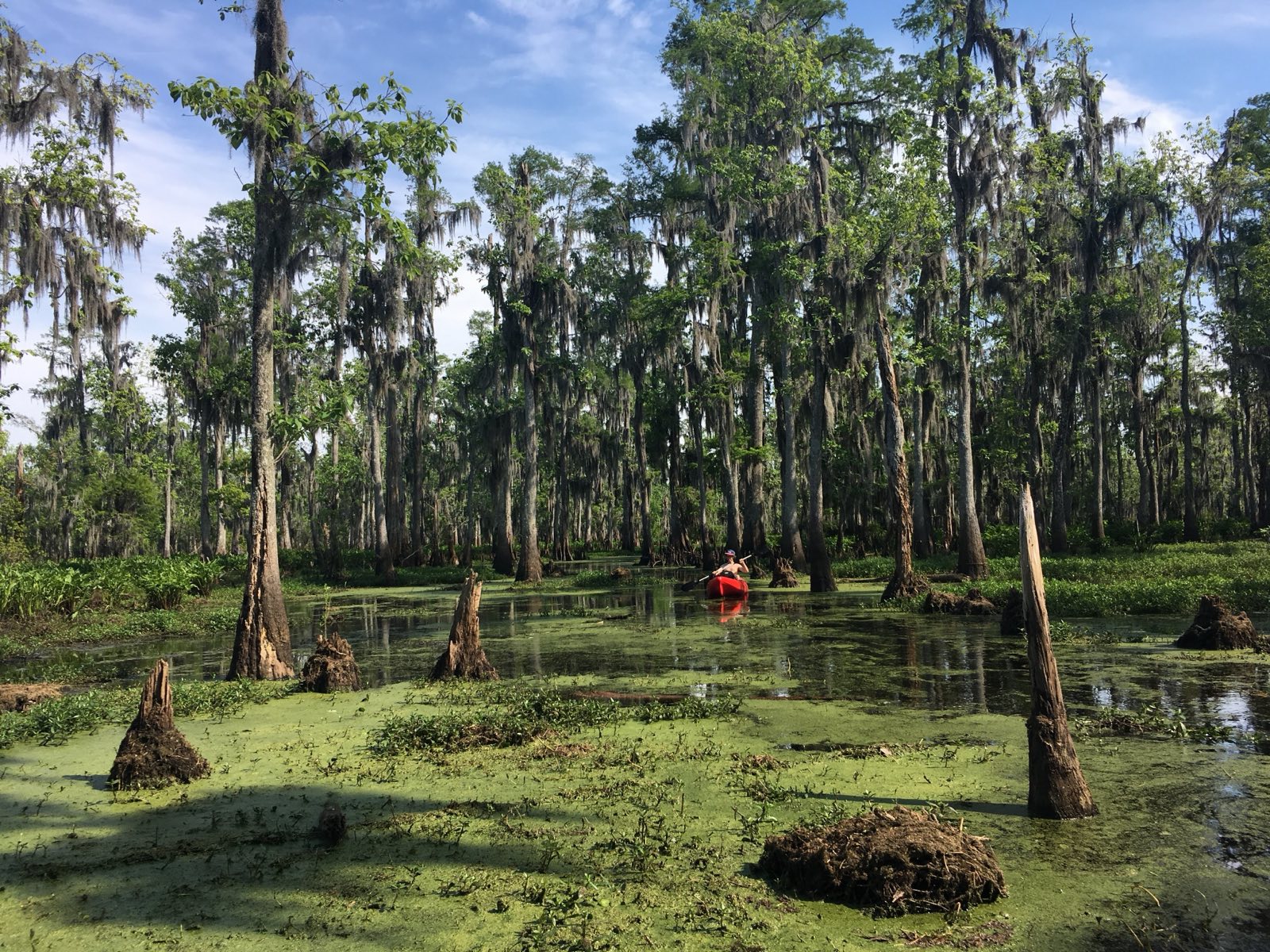

Louisiana has more than three million wild alligators. Verified fatal alligator attacks in the state over the past century: fewer than two. Those two numbers together are the honest answer to whether it is safe to kayak with alligators. The risk exists. It is also genuinely very small, and most of what makes it small is not luck.
What the numbers actually say
Alligators are ambush predators that target things at the water’s surface, usually at dusk and dawn when visibility drops. A kayak is larger than any prey they are used to, louder than anything in their normal experience, and smells like a human, which they have learned to avoid. The combination means that most alligator encounters from a kayak end with the gator sliding off its log before you even get close. They are avoiding you more than you are avoiding them.
The attacks that do happen, mostly in Florida, which has fewer gators than Louisiana, almost always involve people swimming alone, fishing at the edge of water at night, or feeding gators, which habituates them to approaching humans. Kayakers are rarely victims and guided kayak tours have an essentially clean record.
What to actually do when you see one
The right move is: nothing dramatic. Keep paddling at a steady pace, give it a wide berth if you can, and don’t stop to try to get closer for a photo. Gators read slow, quiet approach as predatory behavior; moving steadily past reads as something too big to bother with. Banging your paddle on the hull is a reasonable backup if one is blocking a narrow channel and you need it to move.
- Don’t feed them, ever. Alligators that have been fed associate humans with food and become the rare dangerous ones. Most gator attacks are on people near feeding areas.
- Avoid swimming near your kayak in the swamp. The kayak signals ‘big.’ Your dangling feet do not.
- Nesting females in May through July are more defensive. If you see a nest, wide berth.
- Dawn and dusk, when gators feed most actively, are also when the swamp is most beautiful. Just be more alert.
Guided versus self-guided
On a guided tour, a good guide reads the swamp constantly and keeps the group out of situations where a confrontation becomes possible. They know which channels have reliably grumpy residents, when nesting season is making particular spots more charged, and how to handle the rare moment when a gator is not giving ground. That situational awareness is worth more than any tip list.
If you are deciding between operators, our comparison of New Orleans swamp tours covers who runs small-group trips with experienced naturalist guides, which is what you want for this kind of paddle.
Common questions
Are alligators dangerous to kayakers?
Alligators rarely attack kayakers. Louisiana has more than three million wild alligators but fewer than two verified fatal attacks in the state over a century. Most gator encounters from a kayak end with the alligator moving away before the kayak arrives. The main risk factors, feeding, night swimming, and approaching on foot, do not apply to guided kayak tours.
What do you do if an alligator approaches your kayak?
Keep paddling at a steady pace and give it space. Most gators will turn away. If one is blocking a narrow channel, bang your paddle on the hull to spook it. Never feed or try to touch an alligator from a kayak.
Do alligators attack kayaks?
Reported cases of unprovoked alligator attacks on occupied kayaks are extremely rare. A kayak is larger, louder, and smells more human than any natural gator prey. The documented attacks in the US mostly involve swimmers, not kayakers.
What time of year are alligators most active in Louisiana?
Alligators are most active between March and October when water temperatures climb above 70 degrees. Nesting season runs May through July, when females near nests can be more defensive. Winter gators are still present but sluggish and stay underwater more.
See them up close the safe way.