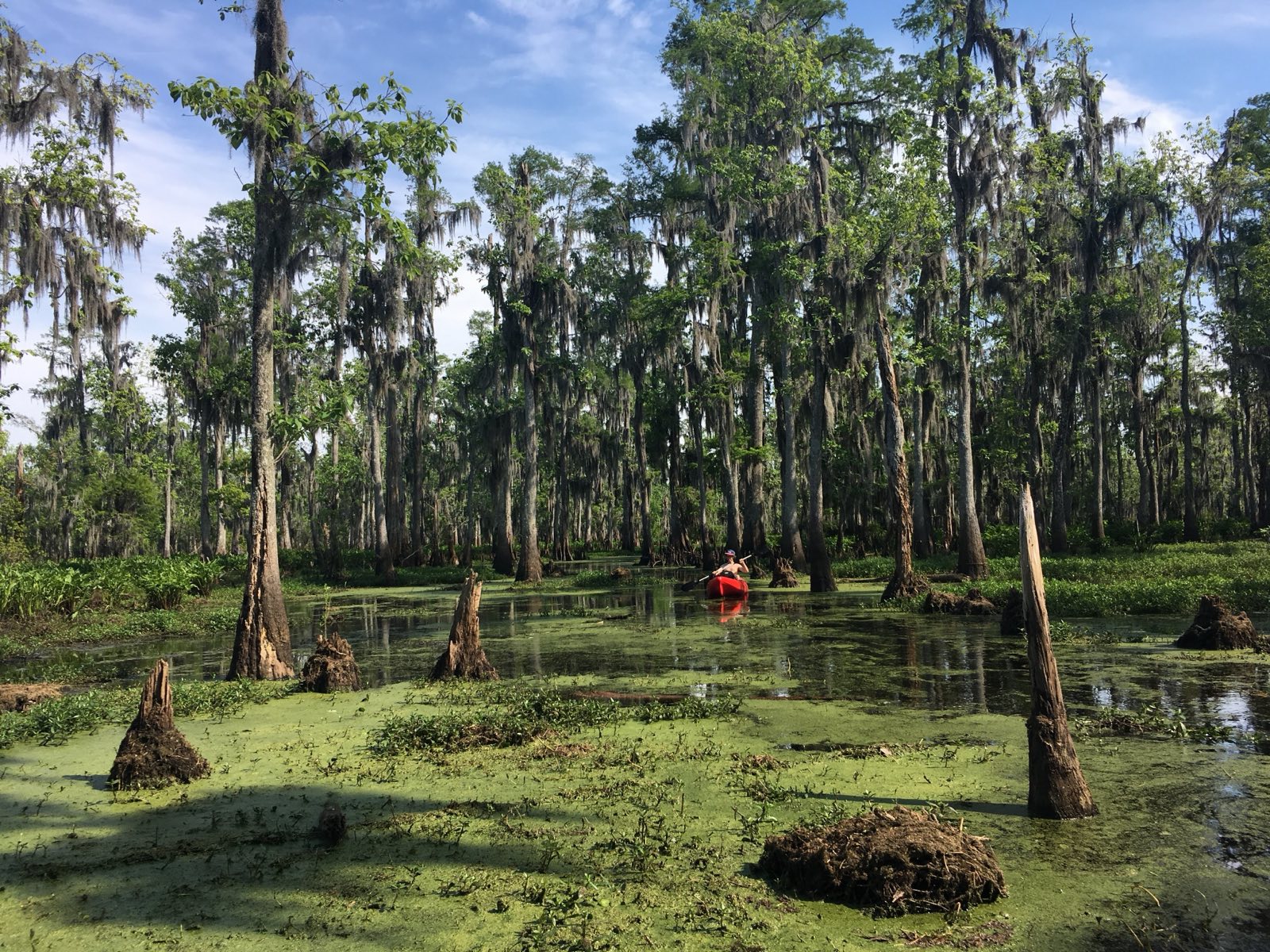

The bald cypress is the tree that makes the Louisiana swamp look like the Louisiana swamp. Spanish moss-draped, rising straight from the black water, surrounded by its strange woody knees. It can live more than 600 years. It is deciduous, which surprises most people who expect an evergreen. And it is under pressure in ways that the old trees you paddle under have no way of knowing.
What makes it unusual
Most conifers are evergreen. Bald cypress drops its needles every fall, which is how it earned its name. In late October and November the foliage goes from green to amber and rust before falling, giving the Louisiana swamps a color season that tourists from the Northeast do not expect. Then it stands bare through winter, which is when it looks most like a ghost forest, gray columns rising from black water.
It also survives conditions that would kill most trees. Extended flooding, anaerobic soil, alternating wet and dry seasons. The root system that makes this possible is extensive and shallow, which is why cypress knees, the woody projections that grow up from the roots, can appear several feet from the trunk in any direction.
The cypress knees mystery
Nobody has fully settled what cypress knees actually do. The prevailing theory is that they help the tree get oxygen to roots sitting in waterlogged, oxygen-poor soil. Some researchers think they also provide physical stability in soft sediment. Others have noted that removed knees don’t seem to harm the tree. The honest answer is that we know what they look like and roughly where they grow, and the function debate is ongoing.
From a kayak, knees are navigation hazards in very shallow water and interesting landmarks in deeper channels. A cluster of knees marks an old, well-established tree. The largest cypress in the Louisiana swamps, the ones with trunk diameters above six feet, can be surrounded by knees ten to fifteen feet away in every direction.
How old are the trees you’re paddling past?
Some of them are old. Bald cypress in undisturbed swamps regularly reach 400 to 600 years, and specimens older than that exist. The trees you see on a Manchac or Honey Island kayak tour predate European settlement of Louisiana. A cypress that was already a hundred years old in 1720 looks much the same today as it did then. That continuity is one of the quieter things about paddling here.
The logging legacy
Most of Louisiana’s old-growth cypress was clearcut between roughly 1880 and 1930. The timber industry moved through the swamps with industrial efficiency, and what was standing for centuries was gone in a few decades. What you see now is mostly second growth, typically 80 to 150 years old, with occasional old-growth survivors in the most remote areas. The second growth is beautiful. It is not the same as what was there.
The trees are also facing new pressure from saltwater intrusion and the broader wetland loss crisis covered in why Louisiana’s swamps are disappearing. Ghost forests of standing dead cypress are visible on any paddle through the transitional zones.
Common questions
How long do bald cypress trees live?
Bald cypress regularly live 400 to 600 years in undisturbed swamp conditions. Some specimens are older. The large trees visible on swamp kayak tours near New Orleans likely predate European settlement of Louisiana.
Why do cypress trees have knees?
Cypress knees are woody projections that grow up from the root system. The leading theory is that they help deliver oxygen to roots submerged in waterlogged, oxygen-poor soil. Their exact function is still debated among researchers.
Are bald cypress trees evergreen?
No, bald cypress is deciduous, which surprises many visitors. It drops its needles each fall, usually turning amber and rust in October and November before going bare through winter. This seasonal color change is one of the underrated things about visiting Louisiana swamps in fall.
Can I see old cypress trees on a New Orleans kayak tour?
Yes. Both the Manchac and Honey Island swamps have old cypress, some likely several hundred years old. The largest trees are in the most protected and least-disturbed areas of the swamp, which guided kayak tours are specifically routed through.
Paddle past trees older than the country.